
Why people ask for poems about love, loss and everything in between boils down to how people connect with poetry that is associated with emotions. When someone sits down with a poet and is asked what they would like a poem about, the answer can be surprisingly simple and it is often associated with love, a memory, a celebration or a cherished relationship.
Personalized poems have a particular way of holding these stories. They allow someone to offer a small piece of their experience and see it returned as language shaped specifically around what they shared. Poetry Foundation describes poetry as an arrangement of language that can convey a story, idea or emotion, while also recognising loss and love among the experiences poetry can express. That range helps explain why people continue to ask for poems about some of life’s most personal subjects.
Love Is One of the Most Natural Places to Begin
Love gives people an almost endless supply of details to remember. It might be the way someone laughs, the place where two people first met, a particular morning they spent together or a phrase that has become part of their shared language. When someone asks for a poem about love, they are rarely asking only for the word itself. They often have a particular person or collection of memories in mind and a custom poem can give those details somewhere to meet. The subject may be love, but the details make the poem personal.
People Ask for Poems About Loss Too
Loss creates another kind of relationship with language.There are experiences that can be difficult to describe directly, particularly when someone is trying to remember a person who is no longer present. A poem can provide a different structure for those memories, allowing a person, place, gesture or moment to become part of the writing.
Poetry Foundation maintains collections of poems about sorrow, grieving, remembrance and specific kinds of loss, showing how widely poets have written about these experiences across different periods and relationships.
A Poem Can Hold a Memory
One reason people turn to personalized poems is that memories are often made up of small things. When someone tells a poet about an important person, they may not begin with a grand story. They may mention a habit, a place, a shared joke or something that happened years ago, those details give a poet material to work with.
The finished poem can then preserve part of the story without attempting to reproduce it exactly. The poet interprets what they have heard, choosing images, rhythm and language that can carry something of the original feeling. The result becomes a new piece of writing with roots in a real experience.
People Also Ask for Poems About Ordinary Moments
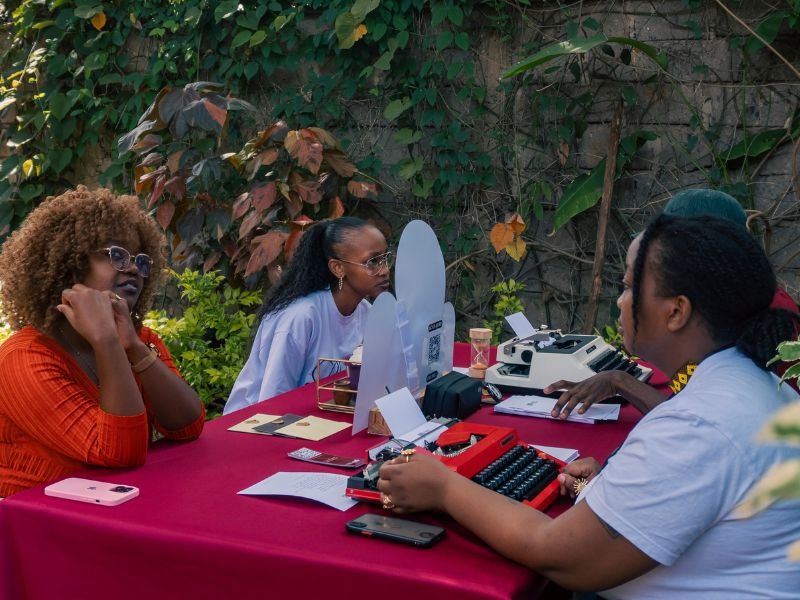
Not every poem request comes from a major emotional event. A person may remember one ordinary afternoon for years because of who they were with or what they were feeling at the time. A poem can give that moment a physical form, this is part of what makes live poetry interesting. The poet does not know in advance what the guest will bring to the conversation.
Birthdays Give People a Reason to Put Feelings Into Words
Birthdays are natural occasions for personalized poems because they invite reflection. A person may want to celebrate who someone has become, remember what they have shared or mark a new chapter in their life. The same approach can work for anniversaries, graduations, retirements, new homes and other milestones. The occasion provides the frame, while the personal story gives the poem its substance.
Memorial Poems Can Preserve Particular Details
Commemorative poetry has its own place within the tradition of writing about loss. A memorial poem might focus on a person’s character, the things they loved, the memories their family carries or the details that made them recognisable to those who knew them. The Poetry Foundation’s collection of poems for funerals includes work about grief, commemoration and consolation, with poems addressing the loss of parents, children, friends and spouses.
For someone commissioning a commemorative poem, specificity can be especially important. A person’s name matters, but so can the smaller details that make their memory feel present. A favourite saying, a familiar place or a simple habit can sometimes say more about someone than a list of accomplishments.
Sometimes People Share Only a Little
A live poetry experience does not require someone to tell a poet their entire story. At Poetry O’Clock, guests are invited to share a word, feeling or thought. A poet may ask one or two questions to understand the subject more clearly, then creates the poem in real time. The finished poem is written from scratch and becomes a physical keepsake. This means the starting point can be as small as a single word.
From there, a short conversation gives the poet enough context to begin. The guest decides how much they want to share, and personal stories are treated as private by default at Poetry O’Clock.
Why Conversation Matters
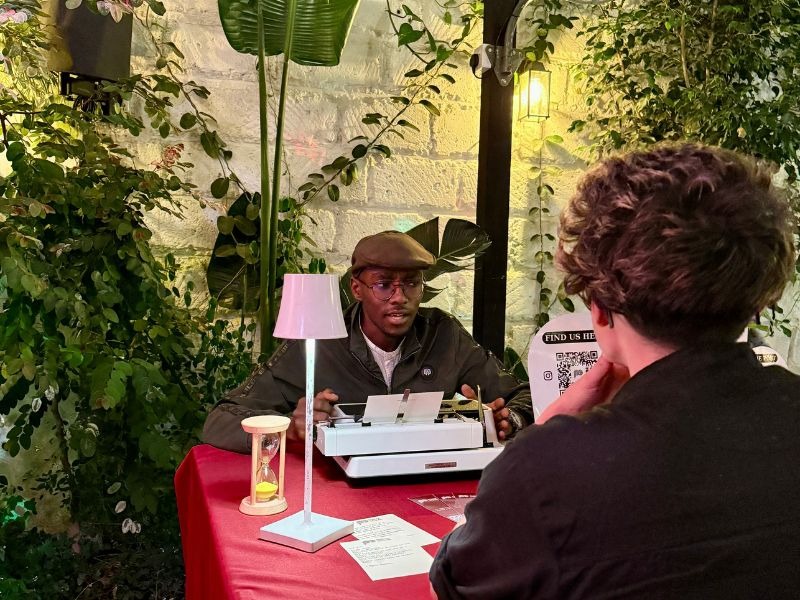
Personalized poetry depends on listening, a poet writing from conversation has to notice more than the obvious subject. They may listen for a particular detail, a phrase that reveals something about the person or a memory that seems to carry unusual weight. The conversation also gives the guest a moment to think about what they actually want the poem to hold.
This is one reason live poetry can feel different from ordering a generic poem around a broad theme. The writing begins with a particular person and a particular exchange making the poem shaped by what was said.
Poetry Gives Stories Another Form
People tell stories in many ways; they tell them over dinner, in letters, through photographs, during family gatherings and in conversations with friends. Poetry offers another form, one that can compress an experience into images, sounds and carefully chosen words.
Poetry Foundation contributor Leah Ward Sears writes about poems bringing back old feelings and memories, comparing their effect to old photographs, music and sensory memories. That connection between poetry and memory helps explain why people may choose poetry when ordinary language feels too familiar or too limited for a particular moment..
Love and Loss Are Only the Beginning
The themes people bring to poetry extend far beyond love and grief; there is friendship, gratitude, homesickness, family, childhood, hope, change, celebration, longing and humour. There are poems about places people miss and poems about places they are discovering for the first time. There are also requests that are difficult to categorise.
Someone may ask for a poem about a particular season of their life. Another person may want to capture the feeling of starting over. Someone may simply want words for a person who has been important to them. Personalized poems can accommodate all of these experiences because the starting point is the person rather than a fixed category.
The Poet Is Listening for the Detail
A strong personalized poem does not need every detail from the conversation, the poet has to make choices. Which image belongs in the poem? Which detail reveals something about the person? What should be left unsaid? Where should the poem slow down? What kind of ending feels true to the material? These decisions are part of the craft.
At Poetry O’Clock, live poems are created on a manual typewriter while the guest waits nearby. The process takes approximately five to ten minutes, with the sound of the keys, the pace of writing and the physical page forming part of the experience. The guest sees the poem becoming something tangible.
When the Poem Becomes a Keepsake
The finished poem can continue its life after the conversation when its placed in an envelope, given to someone else, kept beside a photograph or stored with other letters. If the poem was written for a particular occasion, the physical page can become associated with that moment.
The Post extends this idea beyond a live event. A sender can share a person, story, memory, feeling, celebration or moment with Poetry O’Clock, which is then interpreted into an original poem, individually typewritten, wax-sealed and sent by mail. This makes personalized poetry possible across distance. Someone can receive a poem even when the person who commissioned it cannot be there to hand it over.
Why People Ask for Poems About Love, Loss and Everything In Between
Why people ask for poems about love, loss and everything in between has a simple answer: people carry stories that they sometimes want to see reflected in words. Love, grief, friendship, celebration and change all give us reasons to pause and remember. A poem creates a small space where those experiences can be gathered, shaped and held.
At Poetry O’Clock, this begins with listening. A guest shares something that matters to them, a poet pays attention to the details and those details become an original piece of writing. Through live poetry, private commissions and The Post, the experience can happen around a table, at an event or across distance.
The stories people bring to poetry are rarely identical, and they do not need to be. A poem can hold a celebration, a memory, a person, a question or a feeling that has been difficult to name. Sometimes all a person needs is a few minutes, a listening ear and enough space for their story to become words.
