
The difference between a good poem and a great one can be difficult to define because poetry does not follow a single formula. Poems can be quiet or dramatic, conversational or highly structured, direct or mysterious. A sonnet and a free verse poem may use completely different techniques and still leave a lasting impression.
Poetry Foundation’s resources on reading and writing poetry point to several elements that shape this experience, including imagery, sound, rhythm, line breaks and the active relationship between poem and reader. Looking closely at these elements gives us a useful way to understand poetry craft without reducing it to a set of rigid rules.
A Good Poem Gives You Something to Notice
A good poem often begins with a strong idea, feeling, observation or image which gives the reader somewhere to enter. A familiar subject can feel fresh when it is approached through precise language and an unexpected perspective. An ordinary object can become memorable when the poet notices something about it that the reader has overlooked. This is one reason poetry rewards attentive reading, a poem can contain details that seem small at first and become more significant as the reader spends time with them.
Specificity Makes a Poem Feel Real
One of the clearest qualities in memorable poetry is specificity. Consider the difference between saying that someone had a difficult childhood and describing the particular kitchen where they used to wait for a parent to come home, the chipped cup they always used or the sound of a gate opening at dusk. Specific details give emotion somewhere to live.
Poetry Foundation’s discussion of imagery describes images and descriptions as a way of bringing readers into a physical experience. It also notes that poetic imagery can engage all five senses, allowing a poem to work through sound, touch, taste and smell as well as sight. A poem becomes more immediate when its emotions are connected to things the reader can see, hear, touch or imagine.
Emotional Honesty Matters
A poem can be technically accomplished and still leave a reader untouched. Emotional honesty gives writing another dimension and it can be achieved by making the emotional centre of a poem feel considered and believable. A poem about love or grief brings this out through an object, a gesture, a memory or a moment of silence. The poet trusts the details to carry some of the weight.
For the reader, this creates room to participate. Poetry Foundation’s Edward Hirsch describes reading poetry as an active process in which readers imaginatively collaborate with the poem. That relationship between writer and reader is part of what allows a poem to continue unfolding after the final line.
Memorable Imagery Gives Emotion a Shape
Imagery is one of the tools that can transform an abstract feeling into an experience. Instead of simply telling the reader that a person feels lonely, a poem might show an empty chair at a familiar table, an unanswered message glowing in the dark or a second cup left untouched showing the image carries emotional information.
Poetry Foundation’s guide adds to this by emphasising the importance of finding charged, resonant details rather than simply filling a poem with description. The strongest images tend to have a reason for being there. They contribute to the emotional or intellectual movement of the poem.
Line Breaks Carry Meaning
Line breaks are another quiet part of poetry’s craft where a poet ends one line and begins another can affect pacing, emphasis and interpretation. A sentence that continues across a line break can create anticipation because the reader has to move forward before the thought is complete.
Poetry Foundation’s guide to the poetic line explains that line length and positioning interact with sense, syntax, sound and rhythm. Line breaks can also create additional meanings or moments of uncertainty for the reader. This is why simply turning prose into short lines does not automatically create strong poetry. The line itself needs to contribute to the poem’s movement.
Strong Poetry Knows What to Leave Out
Good poetry often depends on selection; a poet may have pages of memories, descriptions and ideas behind a poem, but the finished piece might contain only a few carefully chosen details. This kind of restraint gives the reader room. If every feeling is explained, there may be little left for the reader to discover. A poem can become more engaging when it trusts its images and language enough to allow some uncertainty.
Original Language Does Not Mean Complicated Language
A common misconception about poetic writing is that a poem needs unusual or elaborate vocabulary to feel sophisticated. Often, memorable poetry does something more subtle. It takes familiar language and places it in an arrangement that makes the reader hear or see it differently. A simple word can become powerful because of its position, repetition or relationship to another word.
The Poem Needs Its Own Voice
Voice is difficult to define because it develops through many choices at once. Word choice, rhythm, syntax, perspective and attitude all contribute to how a poem sounds. Two poets could write about the same subject and produce completely different poems because their voices approach the subject differently.
A strong poetic voice can feel recognisable without becoming repetitive.What matters is that the language feels connected to the poem’s perspective.
Craft and Feeling Work Together
Technique and emotion are often discussed separately, but in a finished poem they depend on one another. An image may be beautiful, but it becomes more meaningful when it contributes to the poem’s emotional movement. A clever rhyme may be satisfying, but it becomes more effective when its sound reinforces what the poem is doing. A surprising line break can change the meaning of a sentence.
Craft gives feeling form, this is especially important when writing personal poetry. The poet has to decide which details to include, what order they should appear in, where the poem should slow down and when it should end, the choices are part of the writing.
A Great Poem Can Stay With You
Perhaps the most recognisable quality of a great poem is what happens after reading it. You remember an image, you hear a phrase in your head, you think about the poem while doing something completely unrelated or you return to it months later and notice something you missed the first time which shows that the poem has continued beyond the page.
This is partly why poetry can feel so personal even when the reader has never met the poet. The language gives the reader enough space to bring their own memories and experiences into the encounter. A poem can therefore change slightly with each reading because the person reading it has changed too.
What This Means for Personalized Poetry
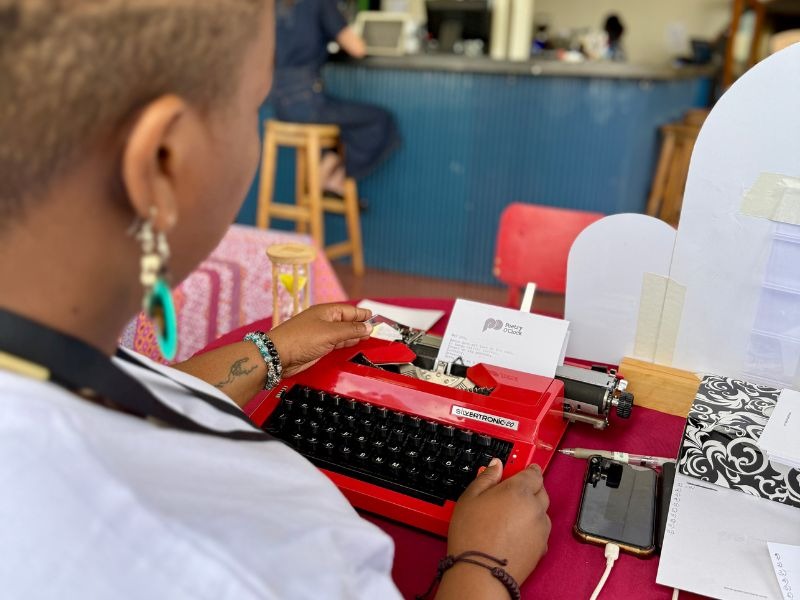
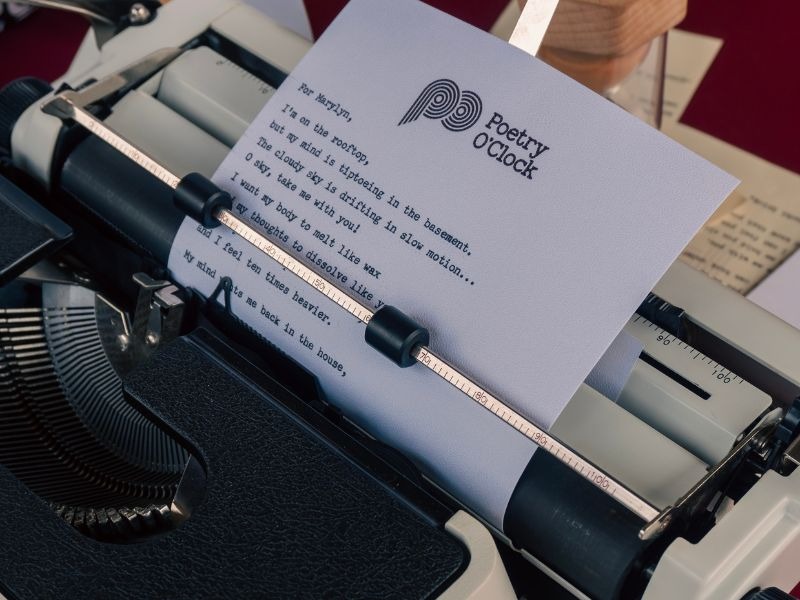
The same principles matter when poetry is written for a particular person. At Poetry O’Clock, a live poem begins with conversation where a guest shares a thought, memory, feeling, person or moment, and the poet listens before creating an original poem in real time on a manual typewriter. Each piece is written once for one person and becomes a physical keepsake.
The personal details provide the material. The poet’s craft determines how those details become poetry. A commissioned poem works in a similar way. The person requesting the poem may provide memories, stories and specific details, while the poet considers which elements can carry the emotional centre of the finished piece. The Post follows this approach through custom poetry created from what the sender shares, then individually typewritten and sent by mail.
There Is No Single Formula for Great Poetry
So, what is the difference between a good poem and a great one? There is no checklist that can answer the question completely. A poem may resonate because of its emotional honesty, its precise imagery, its unusual voice, its rhythm, its structure or the particular moment in which someone encounters it. The most useful approach is to pay attention. When you read a poem you love, notice what stays with you. Is it an image? A sound? A line break? A particular word? The emotional turn near the end? The voice of the person speaking?
Reading in this way can deepen your appreciation of poetry and also sharpen your understanding of how poems are made. At Poetry O’Clock, we think about this whenever we create a poem for someone. The goal is to listen closely, notice the details that matter and shape them into language that feels worthy of being kept. The difference between a good poem and a great one may never have a single answer, and perhaps that is part of poetry’s enduring appeal. A poem becomes memorable through the meeting of language, craft, feeling and the person who encounters it.
